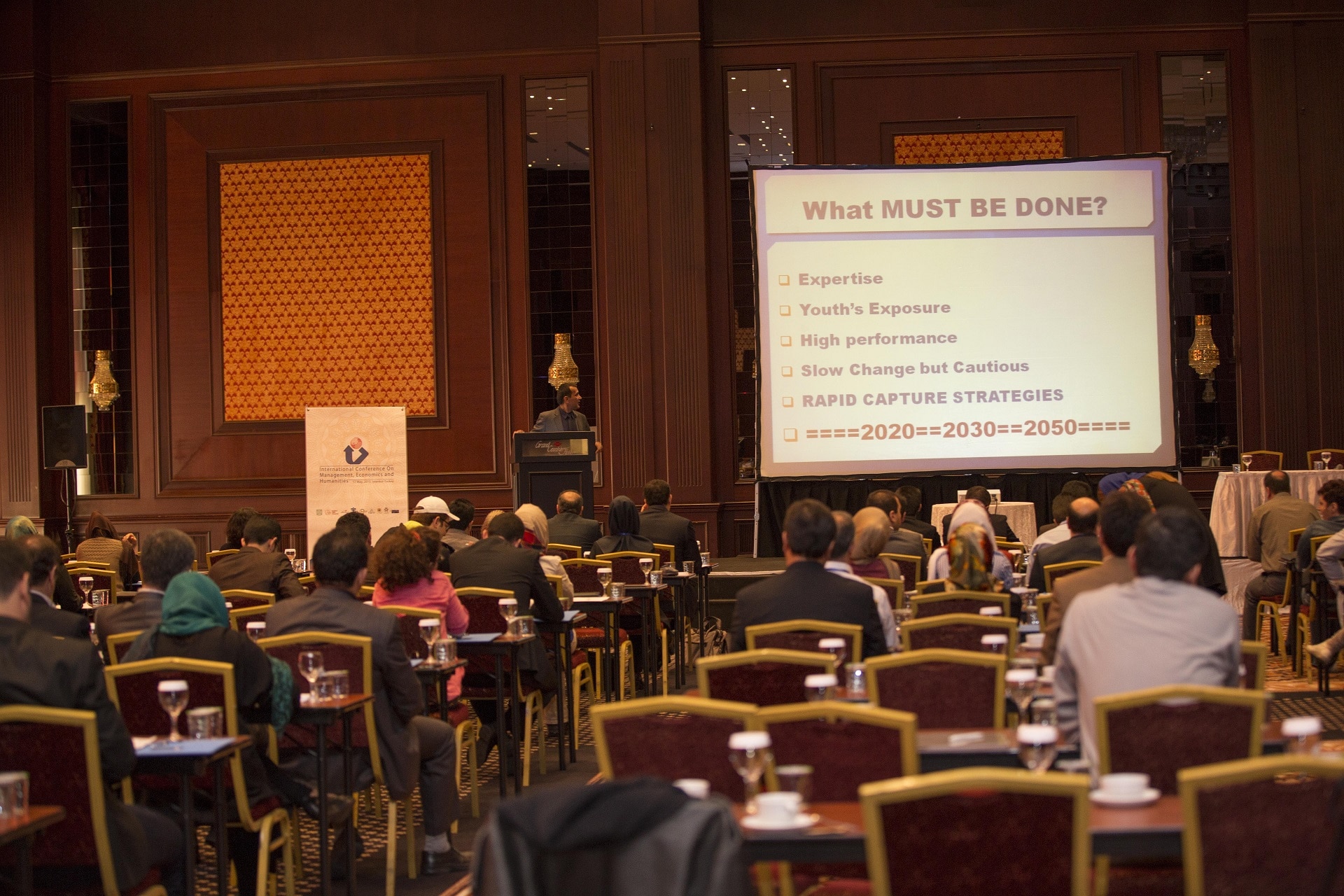
International Humanities and Management Conference –A Brief Conference History

The International Conference on Management, Economics and Humanities (ICMEH) has tried to be a pillar of global academic exchange and it is a key platform for global academic exchange. Since 2016, we've held 16 successful conferences across Europe. We focus on how human behavior, business strategy, and large-scale economics meet. Our top priorities are always integrity, careful double peer review, and building a friendly, supportive research community.

ICMEH Conference History – Bridging Disciplines, Advancing Knowledge

A journey through the history and editions of the International Conference on Management, Economics and Humanities, highlighting its evolution, key themes, and global impact.

16th Edition - Vienna, June 2025

Future of Knowledge: AI, Ethics, and the Impact on Society

The sixteenth edition returned to Vienna to discuss the fast-changing digital world. The main research focused on the effects and impact of generative AI and the changes in humanities, important questions about ethics in a digital world and rules to regulate the flow of data, and how this technology impacts the economy and the future of the workforce. The main themes included:

  • Generative AI in Humanities
  • Ethical Data Management
  • Future of Work
Conference History
Conference History

15th Edition - Nice, June 2024

Strategic Leadership, Geopolitical Risk, and Regional Economies

This edition, held in Nice, France, emphasized the connection between strategic management and the increasing impact of geopolitical risk analysis on international business. It also highlighted another key area; the economics of tourism and hospitality within today’s evolving global markets. The topics included:

  • Geopolitical Risk Analysis
  • Strategic Management
  • Tourism and Hospitality Economics

14th Edition - Copenhagen, July 2023

Sustainable Economics: The Green Shift and ESG Reporting

In Copenhagen, renowned for its sustainability leadership, the emphasis was firmly on Green and Circular Economy models. The research concentrated on measuring and applying ESG (environmental, social, governance) reporting and developing effective renewable energy policy to support corporate responsibility. The topics of the articles included:

  • Green/Circular Economy
  • ESG Reporting and Investment
  • Renewable Energy Policy
Conference History
business management conference

13th Edition - Amsterdam, November 2022

Digital Integration: AI in Business and Leadership Psychology

The thirteenth conference in Amsterdam explored the intersection of data-driven and people-centered approaches. It featured in-depth studies on applying AI and machine learning to business decisions, together with significant research on leadership psychology and organizational change, plus analyses of urban and regional economics. The main themes included:

  • AI/Machine Learning in Business
  • Psychology of Leadership
  • Urban Economics

12th Edition - Vienna, March 2022

Stability After Crisis: Finance, Innovation, and Supply Chains

The Vienna edition highlighted lasting improvements following global crises. The research examined how organizational innovation contributes to economic recovery, applied behavioral finance concepts to steer market changes, and advanced methods for managing supply chain risk. The topics and themes included:

  • Supply Chain Risk Management
  • Organizational Innovation
  • Behavioral Finance
Conference History
Conference History

11th Edition - Stockholm, July 2021

Resilience and Policy: Global Shifts and Sustainability Focus

This edition centered on resilience and examined global policy and corporate governance. The key themes pushed research toward sustainable development goals (SDGs), reviewed government fiscal policy amid uncertainty, and highlighted the expanding role of FinTech in emerging economies. The studies included:

  • Sustainable Development Goals (SDGs)
  • Government Fiscal Policy
  • FinTech Adoption

10th Edition - Amsterdam, October 2020

The Digital Shift: Economic Change and Remote Work

This key conference addressed significant global challenges, with a focus on the initial economic effects of COVID-19. The research offered valuable data on steering remote work and HR-related issues, and it examined the rapid expansion of digital marketing and e-commerce as consumer behavior shifted. The studies included:

  • COVID-19 Economic Impact
  • Remote Work/HR Challenges
  • Digital Marketing and E-Commerce
Conference History
Conference History

9th Edition - Cambridge, June 2025

People, Consumer Behavior, and Ethical Business Management

The London session concentrated on maintaining organizational health ahead of crises. The key presentations covered advanced human resource management (HRM) strategies and techniques, careful modeling of global consumer behavior, and reinforcing corporate governance and ethics as public expectations increased. The main themes included:

  • HRM Strategy
  • Consumer Behavior
  • Corporate Governance and Ethics

8th Edition - Barcelona, December 2018

Organizational Change and Global Communication

The eighth edition kept the focus on how organizations work. The research looked at new ideas in organizational culture and change management, better financial modeling techniques, and the importance of cross-cultural communication for managing global teams. The article covered:

  • Organizational Culture and Change
  • Financial Modeling
  • Cross-Cultural Communication
Conference History
Conference History

Conference History Between 2016 and 2018

Foundational Years: Editions 1st through 7th

The first seven ICMEH conferences, from 2016 to 2018, were essential for starting the conference in Europe and building its base across disciplines. These early events were held in important cities like Amsterdam, Batumi (Georgia), Athens, Istanbul, London, and Rome. They focused on core topics like early globalization, basic economic models, pre-pandemic Corporate Social Responsibility (CSR), and classic theories of organization. This rapid period of growth helped us make our double-peer review process strong, bring in many international researchers, and set up the necessary structure. This solid foundation meant the ICMEH community was strong and ready for bigger challenges and more complex discussions in the years that followed. Key areas of focus were

  • Foundational Economic Modeling
  • Organizational Theory
  • Early Globalization Studies
  • Corporate Social Responsibility (CSR)

Humanities, Economics and Management Conference Outcome: Growing Global Knowledge Together

The sustained, sixteen-edition success of ICMEH is a direct reflection of our community's commitment to ethical research and positive, constructive collaboration. By ensuring high academic integrity through double peer review and focusing on the crucial interface between Management, Economics, and the Humanities, we guarantee that every published paper is a credible and valuable contribution.

Each conference has measurably expanded our international networking footprint, leading directly to joint research projects, mentorship opportunities, and the accelerated transfer of knowledge into real-world strategic and societal benefits. We look forward to continuing this tradition of global, interdisciplinary excellence with you.